

All together now!

networklearning and joomlaDear Friends and Colleagues,

The Networklearning website has been updated after a long period of behind-the-scenes redevelopment.

It is now in a new format, Joomla!. This will allow us to be more up-to-date and interact better. (On the other hand if you find any problems using the new site let us know!)
How to Succeed…We have one major new manual, “How to Succeed in your Work” by Bryan Walker, which brings together some powerful tools and ideas. As with most of our manuals, it is available in two formats, .doc (Word) and .pdf (Acrobat)

And we have a new edition of “Interviewing and Counselling at the Grassroots” with thanks to Billy Bbosa from Uganda who came up with a new section on “Recognising & helping people with disabilities”
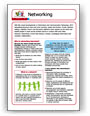
KISSince an important part of networklearning’s philosophy is Keep It Simple, we have started a series of Key Information Sheets (KIS) on a number of aspects related to NGO management skills. First up are “Networking” and “Focus Group Discussions”. Please give us your feedback on the usefulness of this type of information.

We have some new sections on the site: a Gender section in which you’ll find many new links to the basics of gender as well as to gender aspects in various fields… a new Arabic page with links to four key manuals in Arabic of use to young NGOs in the Middle East and North Africa…

We offer examples of Behaviour Change leaflets and games to be used at the grassroots. (Does anyone else have useful, usable examples?)


Related Articles

  • Networklearning’s new guides give the essential facts

    Conflict. We come across it all the time – because it can occur whenever people disagree over their values, motivations, perceptions, ideas, needs, desires… The good news is that engaging with conflict in a healthy way can help resolve intractable issues and clear the air. Our handy 3-page Key Information Sheet, Conflict Matters , clearly explains. Another Key Information Sheet – on ‘Networking’ – has recently been translated into Arabic by our colleague Asmaa Gillespie. > Networklearning’s Key Information Sheets Homosexuality is an issue with the potential to confuse or even provoke irrational response. Basic, clear information can help here, too. So we have produced a no-frills 12-page publication to give the straight Facts about Homosexuality . We also welcome to our library the guest publication Better Ways to Stay Healthy in Asian Tropics , by our experienced colleague Bryan Walker.

  • Social Centre For Humanitarian Services, Agriculture And Environmental Protection (SCHAEP)

    Social Centre for Humanitarian services, Agriculture and Environmental Protection (SCHAEP) development program [ History ] [ Purpose ] [ Objectives ] [ Activities ] [ Partners ] HISTORY OF THE ORGANISATION Liberalization in Cameroon’s economy has led to the abandonment of farmers to unscrupulous market forces – forced to buy expensive farm inputs and sell their produce at giveaway prices. SCHAEP was launched as a capacity-building organization to assist farmers in Kumba to control, manage and benefit from the proceeds of their labour. As members of the community living the experience, the following problems were diagnosed by SCHAEP’s working team: Lack of organization amongst the farmers and hence poor communication. Poor sales of agricultural products due to lack of common markets. High cost of farm inputs as a result of individual purchase as opposed to less costly group purchase. Farmers’ reluctance to modernize traditional farming methods. Inability to resolve boundary problems amicably. Poor management of the farms’ hard-earned proceeds. Lack of knowledge re diversification of resources to generate more income at the end of production season. Rapid population growth due to migration from other villages for fertile lands. Poor hygienic conditions both at home and on the farms. PURPOSE OF THE ORGANIZATION (MISSION) SCHAEP aims to teach, train and organize the farms into common initiative groups through which they can better manage their agricultural products to their benefit. SCHAEP further seeks to empower the farmers physically, morally, and financially so that they can later on solve their own problems. OBJECTIVES To assist communities in the villages by building their capacity on how to live and work in common initiative groups, in order to strengthen their bargaining position over sales of their produce and purchase of farm inputs. Train members of common initiative groups in the need for good governance and accountability. Educate the common initiative groups on individual management of resources. Teach the farmers nutrition and hygiene. Establish a school outreach program on environmental protection through tree planting and formation of clubs. Advocate and lobby for programs that will help the public and members of common initiative groups. Give assistances to widows and their children. Increase farm yields and raise the standard of living. PLANNED ACTIVITIES Create more common initiative groups in the village and neighbouring villages. Inform members of the market trend of their produce. Plant trees in schools. Train farmers on management, leadership and accountability in running and managing a common initiative group. Support widows and their children in vocational institutions. Carry out vision education in the community and schools. COLLABORATION WITH OTHER INSTITUTIONS SCHAEP works with farmers irrespective of race, colour and religion, and with quarter and village heads, which are auxiliary of government. SCHAEP volunteers are available to other organizations for further training. SCHAEP also seeks volunteers to work with its programs.

  • A New Approach developed by the blind

    A Canadian, Daniel Kish, who was born blind, felt that his mobility – using a long white stick – was too limiting. He set about finding out how to improve on it and has now developed a mission to facilitate the self-directed achievement of blind people everywhere. A key component is echo-location, which involves blind people making noises to bounce off objects nearer and further away; they can be trained to become much more aware of the sounds around them, to become more confident and to move more freely. Graduates use bicycles to travel around. A full explanation of World Access for the Blind’s ‘Perception Based’ approach can be read at www. worldaccessfortheblind .org/node/120

  • New manuals in the Networklearning library

    If you work in a region where there has been periods of warfare, major displacement and/or huge repression, your workers have surely met people suffering from mental stress and other problems. Is this a good time to think of actively helping them, in a systematic and informed way? Our new manual Finding Mental Health after Conflict (28 pp. PDF) can guide you with this work. Two new Arabic titles: We now have Arabic language versions of An Introduction to Human Rights in the Middle East & North Africa – a Guide for NGOs (49 pp. PDF) as well as our popular title, A Guide to Fundraising (10 pp. PDF). For more, see our manuals and resources in Arabic Since our last announcement, we have also added a guest publication, the illustrated We can play and move: ideas to help disabled children learn to move through play .