
|

Disability: Introduction

Mary Robinson, UN High Commissioner for Human Rights, said in 2000:

“We know that persons with disabilities frequently live in deplorable conditions, and face physical and social barriers, which prevent their integration and full participation in the community. As a result, millions of adults and children throughout the world are segregated, deprived of virtually all their rights, and sometimes lead wretched and marginalized lives. This is completely unacceptable”

In 2006, the UN finally acted and agreed an international treaty to support the rights and freedoms of disabled people – the first Human Rights convention to be adopted on a global scale this millenium.

“Once you get the paradigm shift… and people adopt a ‘can do’ rather than a ‘can’t do’ approach, a whole lot of other things flow from there”
Don Mackay, chairman UN Disability Convention, August 2006
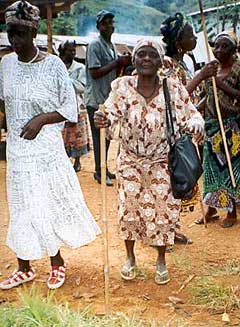
 

ImageThe Human Rights approach to tackling disability means thinking in terms of Inclusion: that everybody, regardless of sex, race, disability etc. should have a dwelling, food, education etc. Inclusion says that the disabled should be brought into the mainstream.

Disability is something created not only by the problem (e.g. blindness) but also by the way society sees the problem and how it reacts to the problem. In some societies, a blind person is seen as “differently abled”; there is money available for appropriate schooling, aids and adaptations. That person can reasonably expect some of what most people receive – education, paid employment, a family. But in another society the same person could be kept out of sight, seen as a stigma on the family and deprived of almost any chances or choices.

Related Articles

  • |

    Water, Sanitation & Waste disposal

    For an overview of activities at different levels of care, see our manual Principles and Practice of PHC (Section 6. Look also at 5.3, Diarrhoea; 5.6, Common Local Diseases related to water; 5.8. Infections prevented by better water & sanitation). Look through WHO’s publications on water, sanitation and health WHO offer a Safe health-care waste management…

  • |

    HIV/AIDS

    For activities at the different levels of care, see our manual Principles and Practice of PHC (Section 5.2) Major websites on HIV/AIDS are at WHO, Aids Alliance, UNAIDS and UNFPA AVERT has a comprehensive section on various kinds of HIV programming including prevention The Communication Initiative Network has a dedicated HIV/AIDS Network Useful for carers is our…

  • |

    Examples of ways to alleviate poverty

    Tools for Self Reliance is a UK-based organisation who works with local partners to relieve poverty in Africa by supporting people with the skills they need to set up their own busines. It funds business skills and technical training in trades such as carpentry, welding, bicycle repair and bricklaying in Ghana, Tanzania, Uganda, Sierra Leone, Zambia…

  • |

    Seeds: the gift of life

    Navdanya (‘nine seeds’) is a women-centred movement protecting biological and cultural diversity. Their network of seed keepers and organic producers spreads across 18 states in India. They have helped set up community seed banks across the country, trained over 500,000 farmers in seed ‘sovereignty’ and sustainable agriculture and helped setup the largest fair trade organic…

  • |

    Environmental health

    » Activism with inspirational leadership has succeeded in fighting corruption and resource predators. For example, in the face of powerful – and violent – vested interests, Nohra Padilla organized Colombia’s marginalized urban waste pickers until they got decent wages and working conditions and made recycling a legitimate part of waste management. Aleta Baun, of West Timor,…