
Permaculture and sustainable farming resources
‘Permaculture’ combines the ideas of permanent agriculture and permanent culture.
It is the conscious design and maintenance of agriculturally productive ecosystems… the harmonious integration of landscape and people – providing their food, energy, shelter, and other material and non-material needs in a sustainable way.
Sustainable agriculture practices and community organisation are the cornerstones for farmer self sufficiency and food security – and so form the foundation of a stable social order.
» Find out more: What is Permaculture?
The Worldwide Permaculture Network has a growing database that showcases ‘holistic solutions’ being implemented worldwide. You can locate projects on a map.
» Agromisa supports small-scale farmers – and organisations working on their behalf – by providing them with practical training and education on sustainable agriculture.
» In The Plants for a Future (PFAF) Database you can search through thousands of edible and medicinal plants, including tropical ones, using a number of search criteria.
“There are over 20,000 species of edible plants in the world yet fewer than 20 species now provide 90% of our food. Large areas of land devoted to single crops increase dependence upon intervention of chemicals and intensive control methods with the added threat of chemical resistant insects and new diseases. The changing world climate greatly affecting cultivation indicates a greater diversity is needed.”
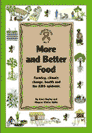
» More and Better Food: Farming, climate change, health and the AIDS epidemic – this 88-page PDF manual, written in simple language from a Christian perspective, presents basic information about food and health, managing soil and water, and improving productivity through organic farming methods. it has participatory exercises for teaching and learning new farming techniques through practical activities, and is well illustrated with line drawings.
» Sustainable agriculture begins with good soil. What is that exactly? Read ‘Benefits of Healthy Soil‘.
» Rich Forests puts together people with production, conservation and regeneration in tropical forests.
» GardenAfrica works with the most vulnerable people to find culturally appropriate plant-based solutions to their everyday challenges. It supports people to make informed choices in managing their resources in ways that are ecologically sustainable – for small-scale production for schools, clinics, homestead gardens and smallholdings. Vital horticultural knowledge about the production of food, fuel, medicine and fibre is conserved, to pass on to the next generation.
» Better World Cameroon is a well-established network that runs projects, workshops and trainings to promote ‘Permaculture the African Way’, including designing eco-villages.
» IDEP is a local Indonesian NGO that develops and delivers training, community programs and media related to sustainable development through Permaculture, and Community-based Disaster Management, to create a ‘Cycle of Resilience’.
» ASHA (Alliance for Sustainable & Holistic Agriculture) is an informal network of farmers’ organisations, consumer groups, women’s organisations, environmental organisations, individual citizens and experts who are committed to the cause of sustainable and viable farm livelihoods in rural India – and thereby, safe, nutritious, diverse and adequate food for all Indians.
Among their resources is the booklet Small – Organic Retail – is Beautiful (52-page PDF), that presents inspiring cases of direct marketing by farmers, retail marketing for organic produce and an emerging Community Supported Agriculture model, to showcase the possibilities that exist with such enterprises.