
Essential manual for refugees to Northern Europe

We recently made a manual Finding Mental Health after Conflict, which focused on Developing Countries. Then we were contacted by a new colleague originally from Sudan, who was interested in working with us. Mubarak has gone through thirty years of asylum-seeking, living in camps, then adapting to life in the Netherlands. In consequence, he had already started on a manual for asylum seekers and refugees in Northern Europe. It contains information about the legislation that affects them and the issues – practical, psychological and cultural – with which they may have to deal. Primarily intended for people like himself from MENA, it is hoped it will be useful for refugees from other areas.
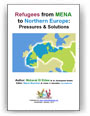
refugees-NEuroperefugees-NEurope ArabicNow in both English and Arabic: Refugees from MENA to Northern Europe: Pressures & Solutions

As a side-product, Mubarak would like to put together a list of doctors and psychologists in Northern Europe who have the skills and knowledge really to help refugees. Do you know anybody good? If so, let us know.

Related Articles

  • Be safe. Use a checklist.

    Here at Networklearning we have found another reason to like checklists. They are a great way of ensuring good training and improving the way professionals do their work. And now a checklist is saving lives. A study carried in eight hospitals across the world has found that using one during major operations cut deaths and complications by more than a third. It ensured that the surgical team checked that they had the right patient, checked that all the swabs and forceps were removed before the patient was sewn up, and so on. Has your organisation developed any checklists for your own workers? We would be very interested to hear about any improvements it has made. Source: news.bbc.co.uk

  • Teenage-friendly Spaces

    Recently we talked in a blog about women-friendly spaces. In UNICEF’s report State of the World’s Children (2012) there are examples of NGOs providing teenage-friendly spaces . The report focuses on the fact that more and more children and teenagers are growing up in cities. Think of the difficulties of being poor, female, (males another time) living in an urban slum.

  • Critical times

    Networklearning invites all its friends and colleagues to take a little time to think about their country and its children under the age of five. Why? Because these little kids are the future of the nation. If they are not reaching their full potential, the whole country loses out. » Read Maeve Moynihan’s article: Early Childhood Development: the critical factors What is Advocacy and why is it important for such issues? » Find out the 10 steps to success – in just 3 handy pages. Download Nicolien Wassenaar’s new K ey I nformation S heet, KIS 4: Advocacy » Also new in the Library : Finding Mental Health after Conflict: This useful manual for anyone planning to help people who have been displaced or repressed is now available in Arabic , thanks to Elmubarak Eldaw (47 pages). » Plus two new guest publications: We have the newest edition for job-seekers of A Guide to Voluntary and Humanitarian Work (164 pages), generously donated by Bryan Walker. And Bryan has also made available the 271-page heavyweight Structures for the Displaced: Service and Identity in Refugee Settlements by James Kennedy.